There is a specific frequency to the African bush—a low-thrumming vibration that you don’t just hear, but feel in your chest. Having spent over 15 years guiding travelers through the dust and glory of East Africa, I can tell you that nothing matches the rhythm of the Great Migration.
If you are researching tanzania safari tours for 2026, you aren’t just looking for a holiday; you are looking for a front-row seat to the greatest wildlife show on Earth. But here is the secret most brochures won’t tell you: the migration isn’t a single event. It is a perpetual loop of life, death, and endurance. To see it correctly, you have to time your journey with the precision of a watchmaker.
This guide breaks down the critical dates for the 2026 season, from the tender moments of the calving season to the adrenaline-soaked river crossings.
The 2026 Migration Cycle: Why Timing is Everything
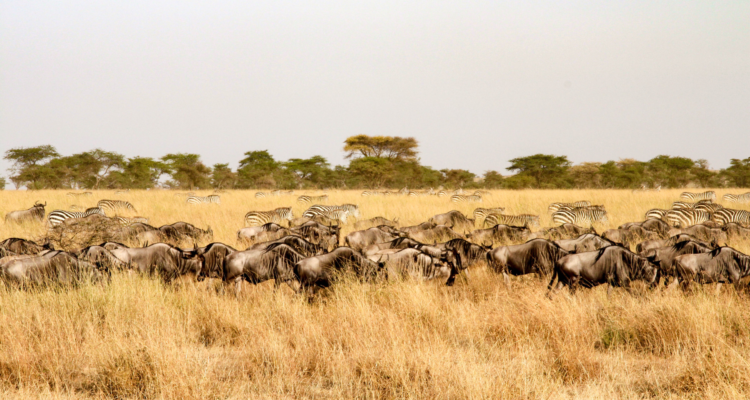
The Great Migration is a 500-mile odyssey undertaken by nearly two million wildebeest, zebras, and gazelles. While the animals move based on rainfall—which can be unpredictable—they generally follow a seasonal path through the Serengeti ecosystem.
When booking tanzania safari tours, your first decision shouldn’t be which lodge to stay in, but which month you plan to travel.
January – March: The Calving Season (Southern Serengeti)
In early 2026, the herds will congregate on the short-grass plains of Ndutu and the Southern Serengeti. This is the calving season—a three-week window where roughly 8,000 wildebeest are born every single day.
- The Experience: It is a time of incredible vulnerability and high-stakes drama. With thousands of wobbly-legged calves around, predators like lions, cheetahs, and hyenas are out in full force.
- Why go in 2026: The Southern Serengeti offers “off-road” driving permissions in certain areas, allowing you to get closer to the action than almost anywhere else in the park.
April – June: The Trek North & The Grip of the Rut
As the southern plains dry out, the herds move toward the Western Corridor. This is often the “Green Season.” While some avoid the rain, savvy travelers know this is when Tanzania safari tours offer the best value and the most lush, photographic backdrops. By June, the “rut” begins—half a million wildebeest mating in a chaotic, noisy spectacle.
July – October: The Iconic River Crossings (Northern Serengeti)
This is the “Holy Grail” of wildlife photography. The herds reach the Mara River, where they must face bloated crocodiles and steep embankments to reach the greener pastures of the Masai Mara.
- The Experience: It is pure, unadulterated tension. You might wait for hours at the riverbank in total silence, only for one brave wildebeest to plunge in, triggering a thundering stampede of thousands.
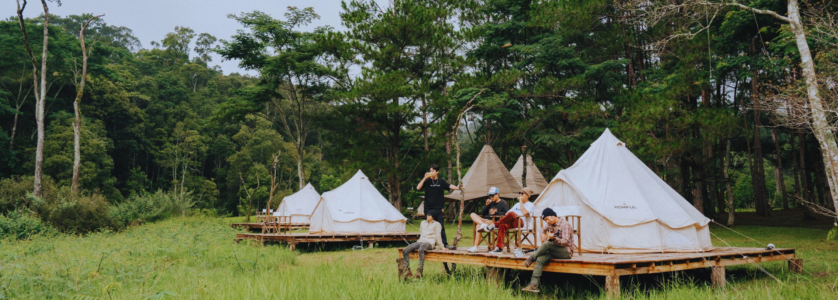
- Expert Tip: In 2026, the Northern Serengeti (Kogatende) is expected to be busy. To get the best experience, look for tanzania safari tours that utilize small, mobile tented camps that stay close to the river.
Navigating the Serengeti: Beyond the Migration
While the wildebeest are the stars, a world-class tanzania safari tour explores the supporting cast. The Serengeti is divided into sectors, each with its own “resident” wildlife that stays put year-round.
- Central Serengeti (Seronera): This is the leopard capital of the world. Even if the migration has moved north, the big cat sightings here are legendary.
- The Ngorongoro Crater: No 2026 itinerary is complete without descending into this volcanic caldera. It is a “Garden of Eden” where you are almost guaranteed to see the endangered Black Rhino.
- Tarangire National Park: If you love elephants, this is your sanctuary. During the dry season of 2026, the Tarangire River becomes a magnet for massive herds, often numbering in the hundreds.
Planning Your 2026 Budget: What to Expect
A common mistake I see is travelers underestimating the logistical costs of tanzania safari tours. Tanzania is not a “budget” destination in the traditional sense; it is a high-value, high-impact ecosystem.
- Entry-Level/Mid-Range: $500 – $700 per person per day. This usually involves high-quality permanent lodges and shared or private game drives.
- Luxury/Bespoke: $1,000 – $1,800+ per person per day. This gets you into exclusive-use conservancies, “fly-in” logistics to skip the bumpy roads, and some of the most stunning tented suites on the continent.
Editorial Policy & Research Standards
At Africa Safaris Tours, our content is built on “Ground-Truth” expertise. We don’t scrape data from the internet; we live it.
- Field Vetting: Our team audits every lodge and camp mentioned in our guides annually to ensure service standards haven’t slipped.
- Conservation First: We only recommend operators who contribute a percentage of their revenue to the Frankfurt Zoological Society or local anti-poaching initiatives.
- Accuracy: Wildlife patterns are cross-referenced with satellite rainfall data and ranger reports from the Tanzania National Parks Authority (TANAPA).
FAQ: Top 5 Search Trends for Tanzania Safari Tours
- What is the best month to see the Great Migration in 2026?
To see the river crossings, aim for August or September. To see the calving season, book for February. If you want to avoid crowds while still seeing massive herds, June in the Western Corridor is a fantastic alternative. - How much does a 7-day Tanzania safari cost?
A mid-range 7-day tour typically costs between $3,500 and $4,800 per person, excluding international flights. This generally covers park fees (which are significant in Tanzania), meals, transport, and expert guiding. - Is Tanzania or Kenya better for the Migration?
Tanzania holds the migration for about nine months of the year, while Kenya’s Masai Mara hosts it for about three. Tanzania offers more space and a greater variety of ecosystems, but Kenya is often slightly more accessible for shorter trips. - Can I combine a Tanzania safari with Zanzibar in 2026?
Absolutely. This is the most popular “Bush and Beach” combination. Most tanzania safari tours conclude with a flight from the Serengeti directly to the spice island of Zanzibar for a few days of relaxation. - What should I pack for a Tanzania safari?
Neutral colors (khaki, tan, olive) are essential to blend in and avoid attracting Tsetse flies. You’ll need a good pair of binoculars, a wide-brimmed hat, and a warm fleece for the early morning game drives, which can be surprisingly cold.
Contact Africa Safaris Tours
Ready to witness the thundering herds of 2026? Let us help you navigate the logistics of the “Pearl of Africa” and the vast Serengeti. Our 15 years of experience are your greatest asset in planning a journey that is safe, seamless, and soulful.