You’ve committed to a once-in-a-lifetime african safari in tanzania. You’ve cleared your schedule and selected your dates. Now, you face the most critical decision in your planning process: Do you stay in a luxurious, permanent stone lodge, or do you opt for a mobile tented camp that “follows” the herds?
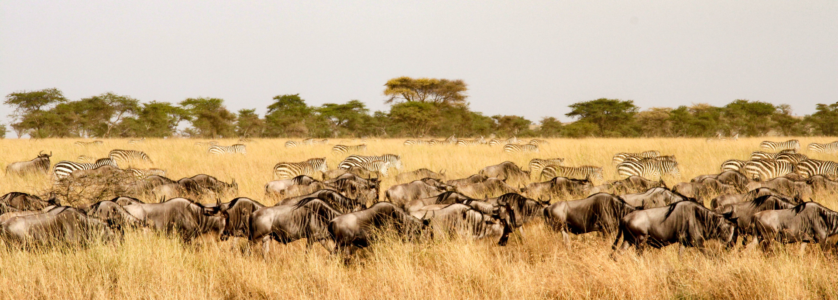
The Serengeti is nearly 15,000 square kilometers. The Great Migration is not a single event, but a fluid, 500-mile circular odyssey driven by rain and instinct. If you choose a permanent lodge that is 60 kilometers away from the current location of the wildebeest, you aren’t just losing travel time; you are losing the very essence of the migration. You are spending your morning staring at the back of a driver’s head rather than a predator’s hunt.
To get the most out of tanzania safari tours, you need to evaluate your accommodation through a tactical lens. It isn’t just about the thread count of your sheets; it’s about the “Cost-Per-Hour-of-Viewing.”
Defining the Dilemma: Fixed Comfort vs. Fluid Proximity
On many tanzania safaris & tours, travelers gravitate toward permanent lodges. These structures are architectural marvels, often perched on high kopjes (rocky outcrops) with infinity pools and air conditioning. They offer a “sanitized” version of the wild.
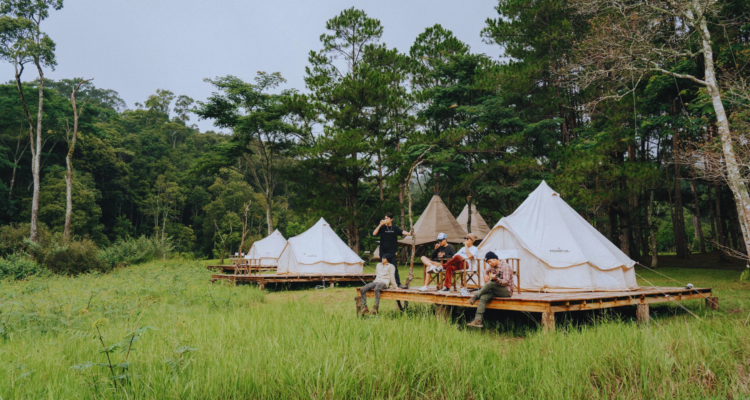
In contrast, mobile tented camps are semi-permanent structures. They move two to three times a year to remain within the “strike zone” of the herds. They offer “glamping” at its peak, think en-suite bathrooms, bucket showers, and gourmet dining, but their primary purpose is strategic placement.
Information Gain: The “Cost-Per-Hour-of-Viewing” (CPHV) Metric
When we analyze the ROI of a tanzania safari tour, we use the CPHV metric. This calculation proves that despite having fewer “traditional” amenities, mobile camps yield a significantly higher return on your investment.
The Math of the Move:
- Permanent Lodge Scenario: Located in Central Serengeti. In July, the herds are in the North (Mara River).
- Commute: 4 hours round-trip.
- Total Viewing Time: 4 hours.
- CPHV: If the lodge costs $1,000/night, you are paying $250 per hour of actual wildlife viewing.
- Mobile Camp Scenario: Located in the Kogatende region (North).
- Commute: 15 minutes.
- Total Viewing Time: 7.5 hours.
- CPHV: Even if the camp costs $1,200/night, you are paying $160 per hour of actual wildlife viewing.
By staying mobile, you effectively double your exposure to high-action wildlife moments for a lower “per-hour” cost.
Strategic Comparison: Amenities vs. Access
| Feature | Permanent Luxury Lodge | Seasonal Mobile Camp |
| Location | Fixed (Often high vantage points) | Dynamic (Moves with the herds) |
| Amenities | Pools, Spas, AC, Gyms | High-end bedding, gourmet food, bucket showers |
| Wildlife Proximity | Variable (Depends on the season) | Optimal (Designed for proximity) |
| Immersive Sound | Dampened by stone walls | Total immersion (Hear lions and hyenas at night) |
| Environmental Footprint | Higher (Permanent infrastructure) | Minimal (Leaves no trace) |
| Best For | Relaxation-focused travelers | Photographers and “Wildlife-First” enthusiasts |
When a Permanent Lodge Wins (And When It Fails)
Permanent lodges are excellent for the “shoulder” parts of your tanzania safaris & tours. If you are looking to decompress after a week of intense tracking, a fixed lodge in the Ngorongoro Crater or the Central Serengeti offers the stability and luxury needed to recharge.
However, a permanent lodge fails when it is marketed as a “Migration Lodge” while being located in a region the herds only pass through for two weeks a year. Always ask for the current GPS coordinates of a camp versus the predicted herd location. If a lodge is more than a 45-minute drive from the “action,” you are paying for the building, not the experience.
Visual Scannability: Pro Tips for Selection
- Check the “Move Dates”: Ensure the mobile camp is in its “North” position if you are visiting between July and October.
- Prioritize “Small” Over “Grand”: Smaller mobile camps (8-10 tents) offer a more personalized guiding experience and better access to hidden trailheads.
- The “Fly-In” Advantage: To maximize the CPHV metric, use bush flights to land directly at the airstrip nearest your mobile camp, skipping the 8-hour drive from Arusha.
Frequently Asked Questions
Are mobile tented camps safe?
Absolutely. While the walls are canvas, these camps are managed by professional rangers and surrounded by 24/7 security (Askari). The animals generally perceive the tent as a solid object and do not attempt to enter.
Do mobile camps have electricity and Wi-Fi?
Most high-end mobile camps on tanzania safari tours use solar power. You will have charging stations in your tent, though high-wattage items like hair dryers are usually prohibited. Wi-Fi is often available in the “Lounge Tent” but may be intermittent, which we consider a feature, not a bug.
Is there a “middle ground” between the two?
Yes. Many travelers opt for a “Split Itinerary.” Spend 3 nights in a mobile camp for the raw migration intensity and 2 nights in a permanent lodge for relaxation before flying home.
Are mobile camps more expensive?
Often, yes. The logistics of dismantling, moving, and rebuilding a luxury camp in the middle of the wilderness are immense. However, when measured by the quality of wildlife sightings, they are the more economical choice.