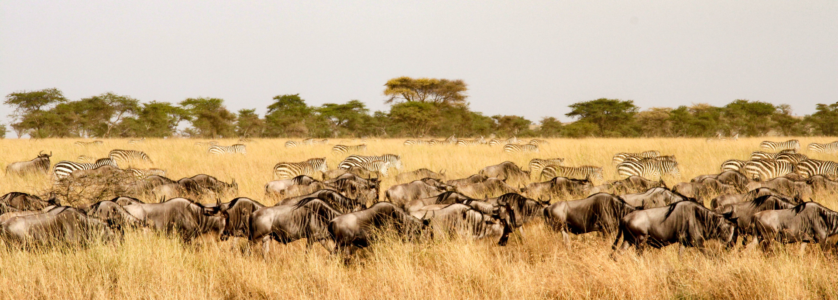
You’ve seen the footage: a million wildebeest thundering across the Mara River, crocodiles snapping, and dust choking the air. You book your tanzania safari tours based on a “traditional” migration map you found online, arriving in the Northern Serengeti in mid-July. You wait. And wait. But the plains are silent.
The problem? Most migration guides are static relics of the 1990s. They assume the herds move like a train on a schedule. In reality, the Great Migration is a chaotic, rain-driven search for phosphate-rich grass. If you rely on an outdated calendar, you aren’t going on an african safari in tanzania; you’re going on an expensive drive through empty grasslands.
The game has changed. Over the last five years, climate oscillations have shattered the “standard” timeline. To witness the spectacle, you need a tactical interception strategy that accounts for real-time weather data and the shifting ENSO (El Niño-Southern Oscillation) patterns.
Information Gain: The ENSO Factor (2021–2026)
If you want to catch the herds, you have to look at the Pacific Ocean. It sounds counterintuitive, but El Niño and La Niña cycles now dictate the success of tanzania safaris & tours.
Our data analysis from the last five seasons shows a clear trend:
- The El Niño Shift (e.g., 2023–2024): Extreme rainfall in East Africa led to “lazy” migrations. With water and grass available everywhere, the herds stayed in the Central Serengeti far longer than usual, delaying the famous Mara River crossings by nearly three weeks.
- The La Niña Push (e.g., 2025–2026): Drought conditions in the south force the herds to move north much faster. In dry years, the “June” crossing often happens in late May.
Tactical Interception Matrix: Traditional vs. Climate-Shift Reality
| Month | Traditional Location | The “New Normal” (ENSO Influence) | Tactical Recommendation |
| Jan – March | Ndutu (Calving) | High volatility; herds may split between Ndutu and Maswa. | Book mobile camps that can move within 24 hours. |
| April – May | Central Serengeti | Heavier “Long Rains” can bog down vehicles. | Use flight-in logistics to avoid impassable mud. |
| June – July | Western Corridor | Earlier arrivals in the North due to drier spells. | Monitor the Grumeti River levels for “mini” crossings. |
| Aug – Oct | Northern Serengeti | Extended stays in the North if El Niño rains hit early. | Stay at the Mara River for at least 4 days to catch a “push.” |
| Nov – Dec | Heading South | Rapid “marathon” movements south if rains are late. | Intercept at the Namiri Plains or Central Serengeti. |
Strategy 1: The “Mobile Camp” Maneuver
When planning a tanzania safari tour, avoid being “lodged” in one spot for too long. The migration is a 500-mile loop.
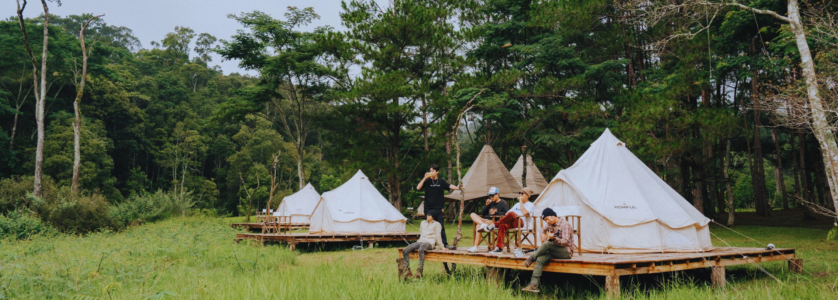
We advocate for Semi-Permanent Mobile Camps. These aren’t basic tents; they are luxury outposts that “follow” the migration. Unlike permanent stone lodges built 20 years ago, these camps move seasonally (usually three times a year) to sit directly in the path of the heaviest concentrations.
- Actionable Takeaway: Ensure your itinerary includes at least two different regions of the Serengeti to “hedge your bets” against unpredictable rain.
Strategy 2: River Crossing Logistics (The “Patience” Protocol)
The Mara River crossing is the “Holy Grail” of tanzania safaris & tours. But it is also where most travelers fail.
Wildebeest are notoriously indecisive. They may gather by the thousands on a riverbank, stare at the water for six hours, and then simply turn around and walk away because a single zebra got spooked.
- Don’t “Lodge Hop”: Spend at least three nights in the Kogatende (Northern Serengeti) region.
- The Guide Factor: An elite guide doesn’t just drive to the river; they read the “pressure” of the herd. They look for “scouts”, individual wildebeest testing the water, and position the vehicle downwind to avoid spooking the leaders.
Strategy 3: Beyond the “Big Two” Rivers
Everyone focuses on the Mara and Grumeti. However, some of the most dramatic african safari in tanzania moments happen during the “Short Rains” in November.
As the herds head south, they pass through the Namiri Plains. This area was closed to the public for 20 years to allow cheetah populations to thrive. Intercepting the migration here offers a tactical advantage: massive wildebeest numbers combined with the highest density of big cats in East Africa, without the vehicle crowds of the river crossings.
Essential Gear for Migration Interception
- High-Magnification Binoculars (8×42 or 10×42): You need to scan the horizon for dust clouds, the tell-tale sign of a moving herd.
- Dust-Proof Camera Gear: The Serengeti is a “fine-powder” environment. Use “weather-sealed” bodies or dedicated rain covers even when it’s dry.
- Satellite-Linked Guides: Ensure your tour operator uses high-frequency (HF) radio and satellite data to coordinate with other “scout” vehicles across the 14,000 square kilometers of the park.
Frequently Asked Questions
When is the best time for a Tanzania safari tour to see the migration?
While there is no “bad” time, July to September is peak for river crossings. However, the February calving season in Ndutu offers the best predator-prey interaction as thousands of calves are born daily.
Is the Great Migration only in Tanzania?
No, it’s a cross-border ecosystem. The herds spend about 80% of their time in Tanzania (Serengeti) and 20% in Kenya (Masai Mara). A comprehensive tanzania safari tour covers the vast majority of the migratory cycle.
Can I see the migration on a budget?
Yes. Mid-range tanzania safaris & tours utilize “tented camps” that offer great access without the $1,500/night price tag of luxury lodges. The key is the location of the camp, not the thread count of the sheets.
How do I know where the herds are right now?
We use a combination of satellite vegetation mapping (NDVI) and real-time ranger reports. When you book with us, we provide a “live” update 14 days before your arrival to adjust any local movements.