In 2026, the concept of travel has undergone a profound shift. We are no longer just “visiting” places; we are seeking experiences that resonate on a soul-deep level. Among all the journeys one can take, Africa Tours and Safaris remain the ultimate gold standard for a once-in-a-lifetime adventure.
As a veteran content creator with over 15 years in the safari industry, I’ve seen the “safari bug” bite thousands of travelers. What starts as a desire to see a lion often ends as a complete recalibration of one’s perspective on time, nature, and humanity. This guide explores why Africa is calling more loudly than ever in 2026 and how to plan a journey that transcends the ordinary.
The 2026 Shift: From “Checklist” to “Connection”
For decades, the “Big Five” (Lion, Leopard, Elephant, Buffalo, and Rhino) was the primary metric of a successful safari. While these icons are as majestic as ever, the modern traveler is looking for something more: presence.
Today, Africa Tours and Safaris are increasingly defined by “Slow Travel.” Instead of rushing through four parks in six days, travelers are choosing to linger. They are spending an entire morning watching a single elephant herd or tracking the intricate footprints of a dung beetle. This shift from quantity to quality is what transforms a “vacation” into a “once-in-a-lifetime experience.”
- The Power of “Wild Stillness”
We live in an era of digital noise. The true luxury of an African safari in 2026 isn’t just the 500-thread-count sheets in a luxury tent; it is the silence.
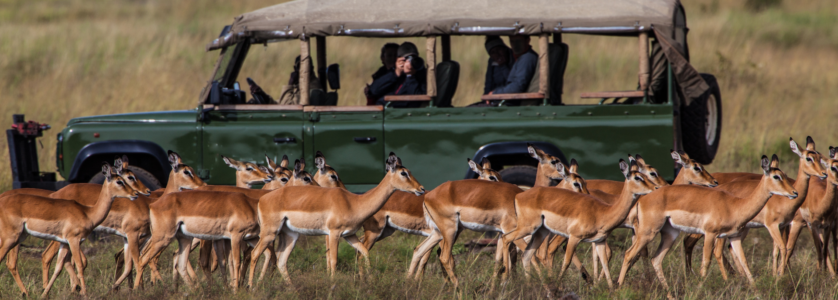
When you sit in an open-sided 4×4 in the heart of the Okavango Delta or the vast plains of the Serengeti, the only sounds are the rustle of the wind through the acacia trees and the distant call of a lilac-breasted roller. This “wild stillness” has a documented effect on the human nervous system, lowering cortisol and heightening the senses.
Expert Tip: The Power of the “Walking Safari”
To truly experience this connection, I always recommend a walking safari. Stepping out of the vehicle and onto the same ground as the wildlife changes your pulse. You aren’t just an observer; you are part of the ecosystem. You learn to read the “morning newspaper” written in the dust—the tracks of a nocturnal leopard or the frantic scurry of a mongoose.
2. Conservation as the Heartbeat of the Journey
In 2026, you don’t just “go” on safari; you participate in a global conservation effort. Modern Africa Tours and Safaris are the primary funding mechanism for the protection of these wild spaces.
- Regenerative Travel: Many lodges now operate on a “regenerative” model, where every guest stay directly funds the rewilding of land or the anti-poaching units that protect the rhinos you are photographing.
- Community Stewardship: The most successful safaris are those where the local communities (such as the Maasai in Kenya or the Himba in Namibia) are the primary stakeholders. When you visit their lands, you are engaging in a cultural exchange that is respectful, ethical, and vital for the local economy.
3. The Unscripted Drama of the Great Migration
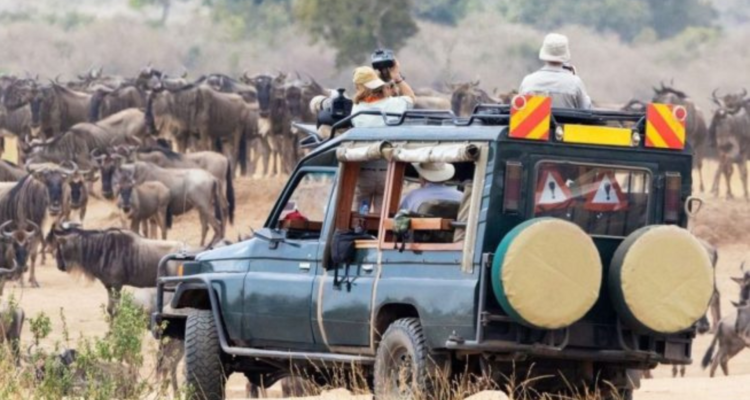
While many sights in the world are predictable, the Great Migration is nature’s ultimate improv show. Every year, over two million wildebeest, zebras, and gazelles move through the Serengeti-Mara ecosystem.
In 2026, we are seeing shifting rainfall patterns that make the “timing” of the migration more fluid. This is where expert planning comes in. A once-in-a-lifetime trip requires a guide who understands the subtle changes in the environment—knowing when the herds will gathered at the banks of the Mara River or when the calving season in the Southern Serengeti will be at its peak.
4. Multi-Generational Magic: A Legacy Trip
We are seeing a massive surge in “Legacy Travel”—grandparents, parents, and children traveling together. Africa is uniquely suited for this.
- For the Kids: It’s a real-life classroom.
- For the Parents: It’s a chance to disconnect from the office and reconnect with their family.
- For the Grandparents: It’s the joy of seeing the world through their grandchildren’s eyes.
Many lodges now offer “Junior Ranger” programs and private villas that provide the exclusivity and flexibility a large family needs to create their own rhythm in the bush.
Editorial Policy: Our Commitment to the Wild
At Africa Safaris Tours, our editorial standards are as high as our guiding standards.
- Field-Tested Facts: Every destination we highlight is vetted by our staff in 2025 and 2026 to ensure the wildlife density and lodge standards remain top-tier.
- Unbiased Ethics: We do not promote “lion cub petting” or any activities that exploit wildlife. We strictly support “low-impact, high-value” tourism.
- Local Expertise: We prioritize the voices of local African guides, whose ancestral knowledge provides the “soul” of every itinerary we craft.
Frequently Asked Questions
1. Is an Africa Safari truly worth the high cost?
When you break down the cost, a safari is an all-inclusive experience that covers light-aircraft transfers, gourmet meals, expert guiding, and significant conservation levies. It is an investment in both your personal memories and the survival of the planet’s most iconic species.
2. What is the “Green Season” and why is it trending in 2026?
The “Green Season” (the rainy season) is no longer the “off-season.” Travelers are realizing that this is when the bush is most beautiful—emerald green landscapes, baby animals everywhere, and dramatic afternoon thunderstorms that make for incredible photography. Plus, the rates are significantly lower.
3. Can I do a safari if I’m not “outdoorsy”?
Absolutely. Modern luxury “tented camps” are basically boutique hotels on stilts. They feature plunge pools, Wi-Fi, air conditioning, and world-class spas. You can be as immersed in nature—or as insulated from it—as you choose.
4. What is the most “untouched” destination for 2026?
While the Mara and Serengeti are iconic, those seeking total solitude are heading to Zambia’s South Luangwa or Zimbabwe’s Mana Pools. These regions offer a raw, “old-school” safari feel with very few vehicles and high predator densities.
5. How far in advance should I book my 2026 safari?
For peak periods (June–October and the December holidays), you should book 9 to 12 months in advance. The most exclusive lodges have limited rooms and sell out quickly, especially those in private concessions.
Your Journey of a Lifetime Awaits
There is a saying in the bush: “You can leave Africa, but Africa never leaves you.” Whether it’s the golden light of a Serengeti morning or the primal rhythm of the night, this continent has a way of healing and inspiring in equal measure.
Contact Africa Safaris Tours Today: