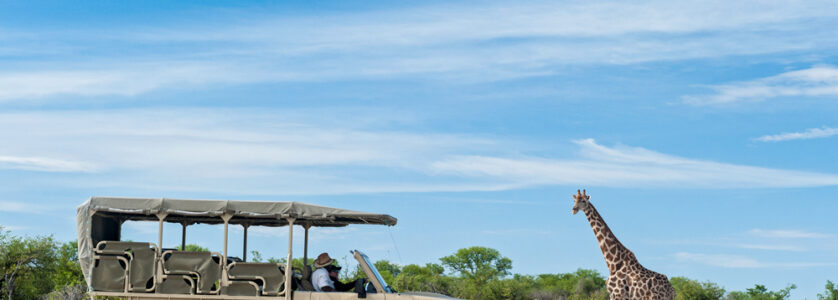
In 2026, Kenya remains the quintessential home of the safari. While other destinations offer beauty, Safaris in Kenya Africa provide a soul-stirring depth that is hard to replicate. It is a land where the modern world falls away, replaced by the ancient rhythms of the savannah and the raw, unscripted drama of the wild.
As an expert who has spent over 15 years navigating the red-dust tracks of the Rift Valley, I can tell you that the magic of Kenya isn’t just in seeing the animals—it’s in the diversity of the landscapes. From the snow-capped backdrop of Kilimanjaro to the arid, rugged north, each national park tells a different story.
1. The Crown Jewel: Masai Mara National Reserve
No discussion of Safaris in Kenya Africa is complete without the Masai Mara. It is the stage for the most spectacular wildlife show on earth: the Great Migration.
- The Experience: Between July and October, over two million wildebeest, zebras, and gazelles thunder across the plains.
- Expert Insight: In 2026, we are seeing a shift toward the “Greater Mara” conservancies. While the main reserve is iconic, private conservancies like Mara North and Naboisho offer more exclusivity, allowing for off-road driving and night safaris that aren’t permitted in the park itself.
- Best For: First-timers, big cat enthusiasts, and photographers.
2. Amboseli National Park: Land of the Giants
If you’ve seen a photo of an elephant with a massive, snow-capped mountain in the background, it was taken in Amboseli.
- The Landscape: Dominated by the presence of Mount Kilimanjaro, the world’s highest free-standing mountain.
- The Wildlife: Amboseli is famous for its “Tuskers”—elephants with tusks so long they almost touch the ground. Because the park is relatively small and flat, the visibility is exceptional.
- Pro Tip: Head to “Observation Hill” at sunset. You’ll see the swamps below filled with hippos and buffalo, while the sky turns a deep purple behind the mountain.
3. Samburu Special Five: The Rugged North
For those who have “been there and done that,” Samburu National Reserve offers a refreshing, arid contrast to the southern plains.
This is the land of the Samburu Special Five—species found almost nowhere else in the world:
- Reticulated Giraffe: With its striking, block-like patterns.
- Grevy’s Zebra: Larger and more finely striped than the common zebra.
- Somali Ostrich: Distinguished by its blue neck and legs.
- Beisa Oryx: A desert-adapted antelope with long, straight horns.
- Gerenuk: The “giraffe-necked” antelope that stands on its hind legs to reach acacia leaves.
4. Tsavo East & West: The Theater of the Wild
Tsavo is one of the largest national parks in the world, split by the Nairobi-Mombasa highway. It offers a “raw” feel that the more popular parks sometimes lose.
- Tsavo East: Famous for its “Red Elephants”—the animals take on a brick-red hue from the volcanic dust they use to bathe. It is flat, vast, and perfect for those seeking solitude.
- Tsavo West: More mountainous and lush. Don’t miss Mzima Springs, where crystal-clear water filters through volcanic rock, allowing you to watch hippos from an underwater viewing chamber.
5. Lake Nakuru: A Sanctuary for Rhinos
While the famous pink flamingo “shimmer” varies with the water levels, Lake Nakuru National Park has solidified its reputation as one of Kenya’s most successful rhino sanctuaries.
- Wildlife Focus: It is one of the few places in Kenya where you are almost guaranteed to see both the Black and White Rhino.
- The Scenery: The park is surrounded by yellow-fever acacia forests and steep cliffs, providing a moody, atmospheric backdrop for your game drives.
Editorial Policy: Research & Authenticity
At Africa Safaris Tour, we believe that a safari is more than a holiday—it’s a contribution to the planet’s future.
- Field-Verified Guidance: Our 2026 park guides are updated based on current animal migratory patterns and infrastructure changes (such as the new SGR railway impact on Tsavo).
- Conservation First: We prioritize parks and conservancies that use your entry fees for community education and anti-poaching initiatives.
- Non-AI Accuracy: We rely on the boots-on-the-ground reports from our professional guides to ensure you know which roads are passable and which waterholes are active right now.
Frequently Asked Questions
1. Which park is best for seeing the Big Five on a Kenya safari?
The Masai Mara is your best bet for seeing all five (Lion, Leopard, Elephant, Buffalo, and Rhino) in a single trip. However, Lake Nakuru is superior for rhinos, while Amboseli is the king of elephants.
2. Is it safe to do a safari in Kenya in 2026?
Yes. Tourism is a pillar of the Kenyan economy, and security in the national parks is extremely high. Always use a reputable tour operator like Africa Safaris Tour to ensure you have an expert driver-guide who understands the local terrain.
3. What is the difference between a National Park and a Private Conservancy?
National Parks are run by the government (KWS) and are open to the public. Private Conservancies are owned by local communities or private landholders. Conservancies offer more privacy, fewer vehicles, and activities like night drives and bush walks that aren’t allowed in most parks.
4. Can I see the Great Migration year-round?
No. The herds are usually in Kenya from late June to October. By November, they begin their trek back south to Tanzania’s Serengeti. However, the “resident” wildlife in the Mara remains spectacular all year.
5. What should I pack for a Kenya safari?
Layers are key. It can be very cold during dawn game drives and quite hot by noon. Choose neutral colors (khaki, olive, tan) to blend in and avoid attracting tsetse flies. Don’t forget a high-quality pair of binoculars!
Your Safari Story Starts Here
Kenya is a place that changes you. Whether you’re watching the sun rise over the Mara or hearing the distant roar of a lion in Tsavo, you’ll realize that the wild still has much to teach us.
Contact Africa Safari Tours: